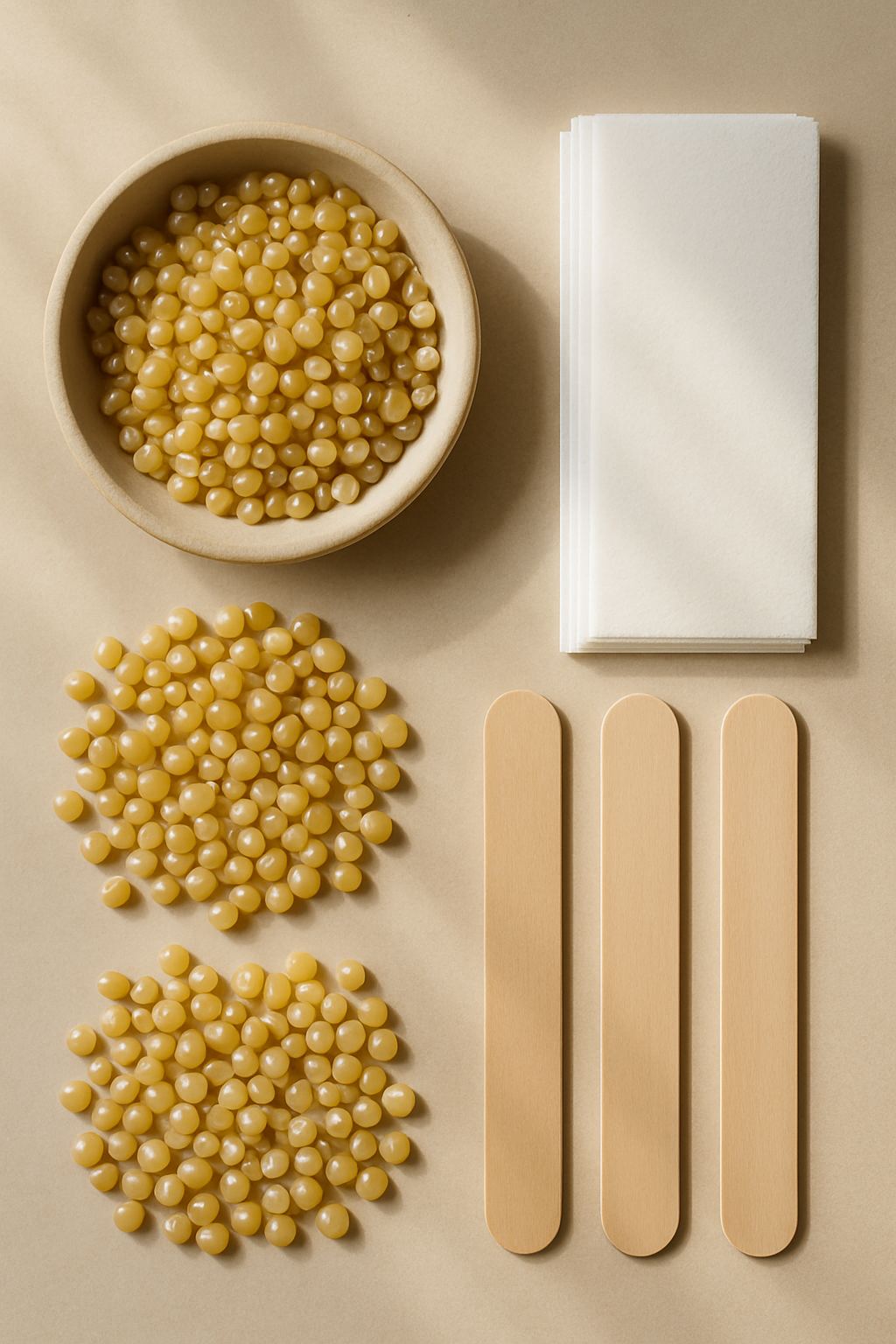
Hard Wax vs Strip Wax — Which Is Better?
 Waxing remains one of the most popular hair‑removal methods because it delivers smoother skin and longer regrowth timelines than shaving; however, choosing between hard wax vs strip wax can significantly affect comfort, precision, and time in the chair. The right choice depends on skin sensitivity, hair type, treatment area size, and how fast the service needs to be.
What is hard wax?
Hard wax (also called hot or stripless wax) is applied warm in a slightly thicker layer, allowed to set, and removed without a fabric strip. It adheres primarily to hair rather than skin, which often makes removal feel gentler in sensitive zones. Because it can be applied in smaller patches and layered strategically, it’s ideal for precision work around contours and for short, coarse hair.
What is strip (soft) wax?
Strip wax is applied in a thinner layer and removed with a cloth or paper strip, making it efficient over large, flat areas. It grips both hair and a bit of the superficial skin layer, which can feel “snappier,” but allows faster coverage and excellent pickup of fine hair. For full legs, arms, backs, and chests, the speed advantage is notable.
Pros and cons at a glance
-
Hard wax strengths:
-
Gentler feel on sensitive skin because it grips hair, not skin.
-
Better precision on small areas and curves (bikini, underarms, face, brows).
-
Effective on short, coarse, or stubborn hair with fewer re‑passes.
-
-
Hard wax trade‑offs:
-
Slightly slower per pass due to set time.
-
Technique matters; poor application can lead to edge lift or incomplete removal.
-
-
Strip wax strengths:
-
Faster for large areas like legs and arms, with thin, quick applications.
-
Excellent pickup of fine, vellus hair for an ultra‑smooth finish.
-
Economical for full‑body sessions due to speed and thin application.
-
-
Strip wax trade‑offs:
-
Can feel more intense on delicate zones because it adheres to the skin’s surface.
-
Less forgiving for repeat passes on the same spot, especially on sensitive areas.
-
Best uses by body area
-
Bikini/Brazilian: Hard wax shines here because it’s kinder to delicate skin and grips coarse hair effectively.
-
Underarms: Hard wax for comfort and precision in a curved, high‑movement area.
-
Face (upper lip, chin, brows cleanup): Hard wax for control and reduced skin tugging.
-
Legs/Arms: Strip wax for speed and even coverage across broad, flatter surfaces.
-
Back/Chest: Strip wax for efficiency; its thin application reduces time and cost.
Pain and sensitivity factors
Perceived pain varies person to person, but technique, temperature control, and skin prep matter more than wax type alone. Hard wax often feels gentler where skin is thin or highly innervated, while strip wax is very tolerable on areas with thicker skin when applied and removed correctly. Consistent breathing, skin tensioning during removal, and avoiding caffeine immediately before the service can also improve comfort.
Hair length and regrowth timing
Both waxes perform best when hair is about 3–5 mm long (roughly grain‑of‑rice length). Hair that’s too short may escape the pull; hair that’s too long can increase discomfort. With regular waxing, many notice slower, finer regrowth over time, making subsequent sessions easier regardless of wax type.
How to prep for fewer ouches and better results
-
Exfoliate lightly 24–48 hours before: A gentle scrub or chemical exfoliant (PHA/BHA) helps lift dead cells so wax adheres to hair more effectively.
-
Keep skin clean and dry on the day: Avoid heavy lotions or body oils pre‑appointment, which can interfere with grip.
-
Pause retinoids and strong acids on the area: Stop topical retinoids and high‑strength exfoliants 3–5 days prior for face and bikini to reduce sensitivity.
-
Avoid sun, tanning beds, and peels pre‑service: Recently sunburned or peeled skin should fully recover before waxing.
-
Trim very long hair: If hair greatly exceeds 1 cm, a careful trim improves comfort and efficiency.
Aftercare to reduce redness and ingrowns
-
Cool, calm, protect: Use cool compresses or soothing gels with aloe, panthenol, or centella post‑service; skip heat, steam, and hot showers for 24 hours.
-
Loose clothing: Reduce friction on freshly waxed areas, especially bikini and underarms.
-
No actives for 24–48 hours: Pause retinoids, AHAs/BHAs, scrubs, and deodorants with strong actives to avoid stinging.
-
SPF daily on exposed zones: Recently waxed skin can be more photosensitive; sunscreen helps prevent discoloration.
-
Ingrown prevention: Begin gentle exfoliation 48–72 hours after waxing (2–3 times weekly) and moisturize daily to keep follicles clear and skin supple.
Special considerations and skin types
-
Sensitive/reactive skin: Hard wax is often preferred on delicate areas; ask for small test patches and ensure temperature is carefully controlled.
-
Fine, dense hair on large areas: Strip wax removes tiny, soft hairs quickly for a glass‑smooth finish.
-
Coarse, curly hair prone to ingrowns: Combine proper prep, hard wax in sensitive zones, and diligent aftercare (exfoliation + hydration) to minimize trapped hairs.
-
Medications and treatments: Inform the provider about topical retinoids, recent chemical peels, microdermabrasion, or isotretinoin; these can increase skin fragility.
Cost and time
Hard wax can be slightly pricier per area because of set time and thicker application, yet it may reduce re‑passes in tricky zones. Strip wax tends to be faster and more economical for large surfaces. For many, the most cost‑effective approach is a mix: hard wax for sensitive, contoured areas and strip wax for the rest.
Technique tips professionals use
-
Skin tension and swift removal parallel to the skin prevent bruising and reduce discomfort.
-
Pre‑cleansing and, where appropriate, a micro‑thin pre‑oil layer under hard wax can decrease skin tug.
-
Working in the direction of hair growth with clean edges on hard wax patches improves lift and complete removal.
-
For strip wax, ultra‑thin, even spreads plus correct strip pressure maximize pickup and minimize residue.
FAQs
-
Which hurts less overall? Generally, hard wax in sensitive areas; on large, less sensitive zones, the speed of strip wax often balances sensation with time saved.
-
Which lasts longer? Longevity is similar; results depend more on hair growth cycles, consistency, and technique than on wax type.
-
Can both be used in one session? Yes—this combo approach is common and pairs comfort with efficiency.
-
How soon can I work out or hit the sauna? Wait 24 hours to reduce redness, bumps, and ingrowns.
-
How often should I wax? Every 4–6 weeks allows enough regrowth for effective removal without excessive length.
The bottom line
-
Choose hard wax for sensitive zones, coarse hair, and precision; choose strip wax for speed on large, flat areas and fine hair.
-
Prep with light exfoliation and avoid actives beforehand; aftercare with cooling, loose clothing, gentle exfoliation, and SPF will reduce irritation and ingrowns.
-
When in doubt, a blended approach offers the best of both worlds: comfort where it counts, efficiency where it matters.